Trade, infrastructure, soft power: for 2026, Africa remains one of the priorities of Chinese diplomacy
Far from being limited to a simple commercial partner, China is building a multifaceted influence in Africa. As part of its global “Belt and Road” strategy, Beijing maintains and consolidates its foothold on the continent, combining investments and the deployment of targeted soft power.
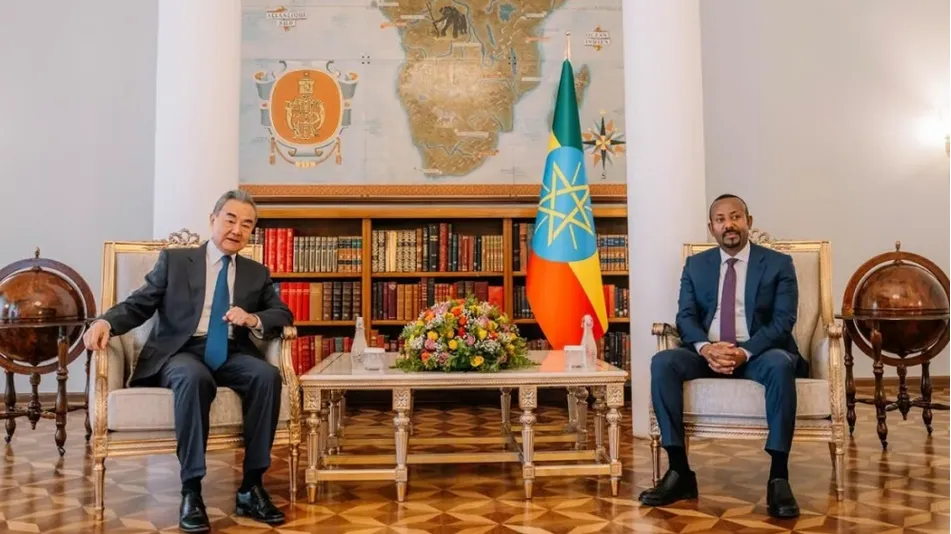
On January 7, the head of Chinese diplomacy Wang Yi began a week-long African tour which will take him to Ethiopia, Somalia, Tanzania and Lesotho, according to the Chinese Ministry of Foreign Affairs. This tour, which will end on January 12, perpetuates a well-established Beijing tradition: for the 36th consecutive year, Africa is the first destination of the Chinese Minister of Foreign Affairs at the start of the year.
Beyond the symbol, Wang Yi's agenda reveals a diplomatic priority: anchoring the Sino-African relationship in so-called "global" cooperation, combining political dialogue, economic exchanges and socio-cultural rapprochement. In Addis Ababa, the minister will notably participate in the launch of the “Sino-African Year of People-to-People Exchanges”, organized at the headquarters of the African Union (AU). The event should help give more visibility to cooperation programs in education, culture and youth, all areas where Beijing cultivates its image as a long-term partner.
China, Africa's largest trading partner
The choice of stages is also significant. Ethiopia, headquarters of the African Union (AU), represents a major diplomatic gateway and a key economic partner, particularly in terms of infrastructure. Somalia, facing serious security challenges, allows China to demonstrate its interest in stability in the Horn of Africa, a strategic region for maritime routes. Tanzania, an economic powerhouse in East Africa, embodies cooperation focused on trade and logistics corridors. As for Lesotho, a small landlocked country in southern Africa, its presence on the itinerary shows Beijing's desire to maintain ties with economies of all sizes.
This tour comes as the Sino-African economic relationship remains a structuring axis of development. China has claimed to be Africa's leading trading partner for 16 years. In 2024, trade between the two parties increased by 4.8% to reach 295.6 billion USD (around 253.5 billion euros) according to Tang Wenhong, Chinese Assistant Minister of Commerce. Beijing's imports from Africa increased 6.9% year-on-year to USD 116.8 billion (around 100.2 billion euros), while exports reached $178.8 billion (around 153.4 billion euros), up 3.5% year-on-year.
These figures underline that for many African countries, China is both an outlet for raw materials, a supplier of manufactured goods and a major investor in infrastructure.
51.3 billion euros of investment by 2035
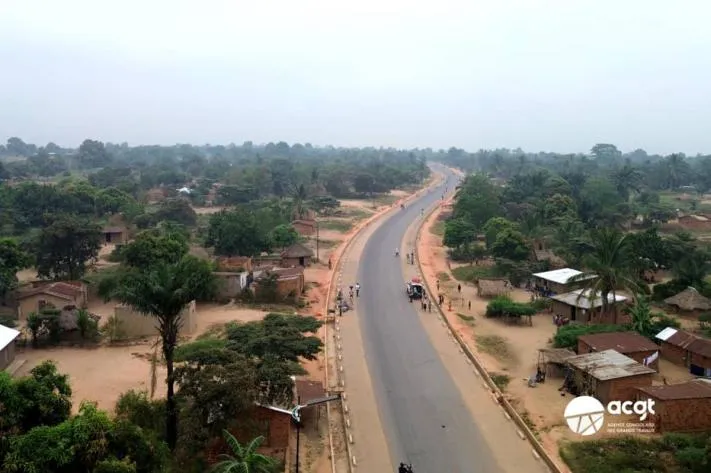
Beijing regularly highlights “win-win” cooperation illustrated by the construction of roads, railways and industrial zones. In many African capitals, Chinese speed of execution is appreciated in filling infrastructure deficits. But debates persist, particularly on debt sustainability, contract transparency or the creation of local jobs. Behind the media releases, the challenge for African governments is to negotiate partnerships that truly promote economic transformation and the transfer of skills.
By 2035, China expects its new direct investments in Africa to reach 60 billion USD (around 51.5 billion euros), devoted in particular to the development of agriculture, industry, infrastructure, as well as environmental protection, the digital economy, the blue economy and other economic activities. With the “Sino-African Year of People-to-People Exchanges”, the Middle Kingdom seems to want to reorient its discourse towards soft power: creating human bridges to strengthen its presence. The objective is to establish a lasting presence on the African continent, at a time when competition from other players – the United States, European Union, Turkey, India – is intensifying.
Wang Yi's tour will once again be closely observed: concrete announcements that fit with African priorities – security, industrialization, energy transition – are expected. One thing is certain, by once again opening its diplomatic year with Africa, Beijing is reaffirming that this continent remains a pillar of its foreign policy, for both strategic and economic reasons.