Paluku imposes “made in Congo” products on the international market
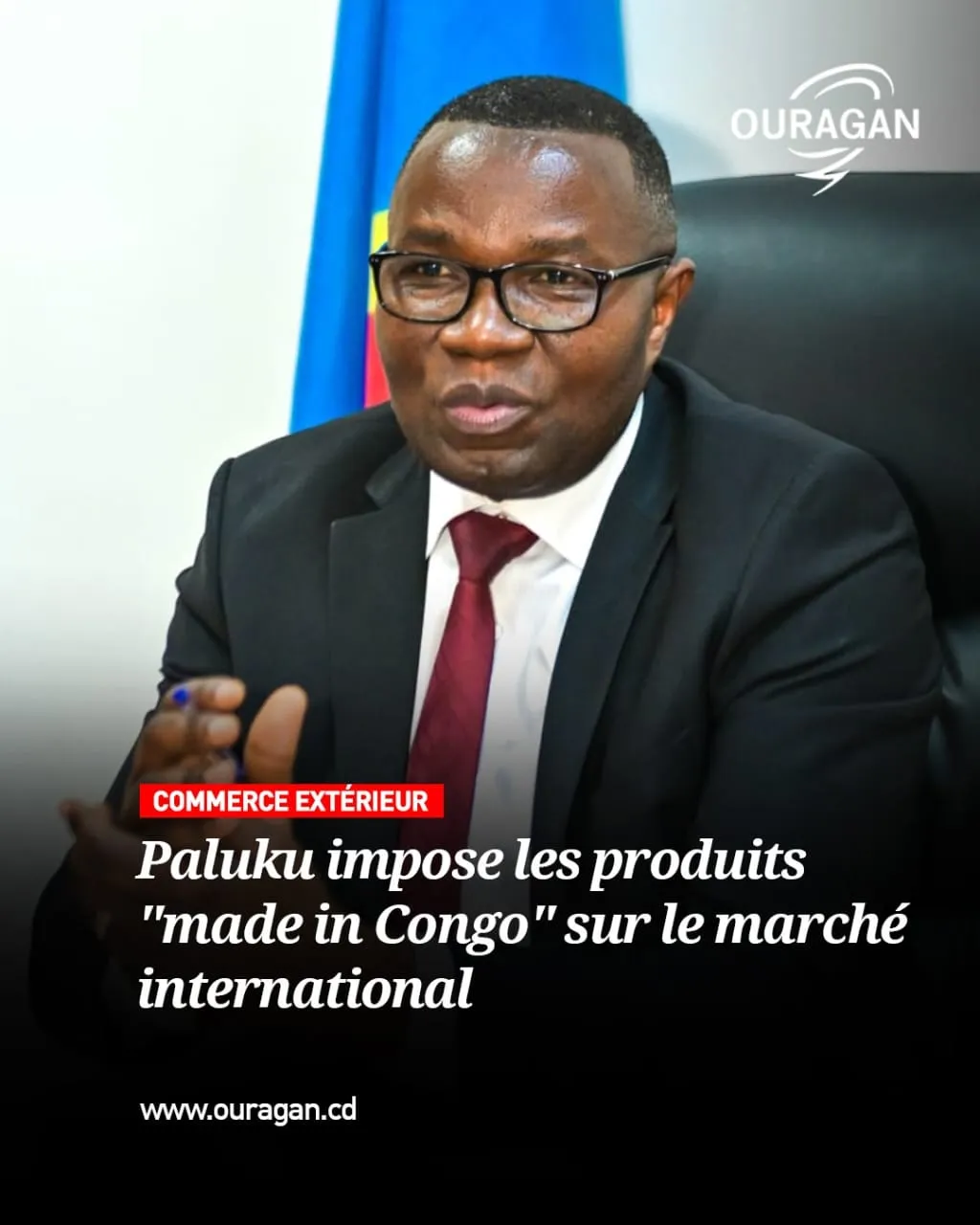
Kinshasa is strengthening its commercial offensive. During the Suminwa II government's accountability exercise on public television, Wednesday September 2, the Minister of Foreign Trade, Julien Paluku, presented the main measures intended to protect local production and open new outlets for Congolese products.
Its offensive is based on two priorities: defending national companies on the domestic market and facilitating access for Congolese products to foreign markets. The government is focusing in particular on the protection of certain local productions, the simplification of trade and the diversification of commercial partners.
Nearly 17 products manufactured in the DRC already benefit from safeguard measures in accordance with the rules of the World Trade Organization (WTO). Cement, tiles and earthenware, electrical cables as well as coal intended for the mining sector are among the products concerned. According to the former governor of North Kivu, these measures must support local businesses, preserve jobs and reduce imports.
Corn flour production is also among the priorities. A joint mission from the Ministries of Foreign Trade and the National Economy was carried out in several provinces to assess the protection mechanisms for local flour mills. The objective is to strengthen the national supply and limit dependence on imported products.
The Congolese state also focuses on trade facilitation. The ratification of the WTO Trade Facilitation Agreement is among the main reforms cited by the minister. The instruments of ratification were deposited in Geneva after the adoption of the text by the government, its approval by Parliament and its promulgation by the head of state, Félix Tshisekedi.
The offensive reaches international markets –
On the foreign market, Kinshasa is increasing the number of entry points for Congolese products. The readmission of the DRC to AGOA is among the advances highlighted by Paluku. This American trade regime allows eligible Congolese products to benefit from preferential access to the American market.
According to figures communicated by Minister Paluku, Congolese exports to the United States increased from $280 million in 2020 to $1.2 billion in 2026. This progression illustrates, according to him, the potential of American outlets for Congolese economic operators.
The United Arab Emirates is another target of this offensive. The minister announced the signing of a global economic partnership agreement giving, according to his statements, access to the Emirati market for nearly 6,000 Congolese products. A trade deal with the UK must also provide preferential access to DRC products.
The Suminwa executive is simultaneously pushing agricultural sectors intended for export. Cocoa, soy and pepper appear among the products identified as having significant potential on international markets. The ministry encourages Congolese producers to favor activities likely to generate more added value.
This strategy is also being played out on African borders. The Simplified Commercial Regime (RECOS) allows small cross-border traders whose goods do not exceed $500 to benefit from an exemption from customs duties in the trade concerned. The mechanism is already operational with Burundi and Uganda, while its extension to Zambia is underway.
Other fronts of the commercial battle –
In Kasumbalesa in Haut-Katanga, the government member announces the gradual elimination of fraudulent practices designated under the names “Bilanga” and “Bambaro”. The government thus wants to reduce losses of public revenue and secure commercial operations at one of the main borders of the DRC.
On the domestic market, small business is now reserved for the Congolese. The decree signed at the end of March 2026 distinguishes these activities from those requiring significant investments, in particular supermarkets, hypermarkets, hotels and the sale of new vehicles. September 30, 2026 was set as the deadline for the strict application of this reform.
The DRC is also continuing its African commercial integration with the AfCFTA. The executive plans an annual reduction of 10% in customs duties, until the gradual elimination of tariff barriers planned for 2035. Kinshasa is also negotiating the reception of an African payment system to facilitate transactions in national currencies.
To support this offensive, the government member relies on information from producers and economic operators. Educational mornings are organized with the Federation of Congolese Companies (FEC), while international price lists are regularly published. The modernization of the Congolese Control Office (OCC), with new laboratories in Kalemie, Lubumbashi, Matadi and Kinshasa, must strengthen quality control.
The next step will be digital. The OCC plans to launch a national QR Code system allowing consumers to check, with their phone, whether a product has been inspected and certified. For the DRC, the commercial battle is no longer limited to opening markets: it also consists of guaranteeing competitive, controlled products capable of winning the trust of buyers.