Economic integration: The AES aims to facilitate trade between its three countries.
In Bamako, the 5th meeting between AES ministers responsible for Industry and Trade and the private sector is focusing on regulatory harmonization, the movement of goods, and the fight against fraud.
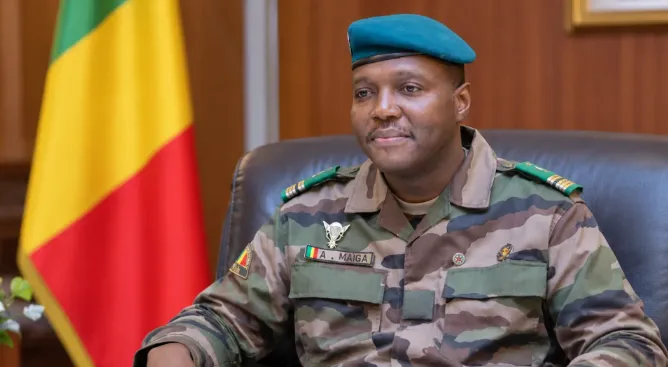
On September 28, 2026, in Bamako, Malian Prime Minister Major General Abdoulaye Maïga chaired the 5th meeting of ministers responsible for Industry and Trade from the Alliance of Sahel States (AES)—an event expanded to include the private sector—alongside his counterparts from Niger and Burkina Faso. Joining the Head of Government were Mali’s Minister of Industry and Trade, Moussa Alassane Diallo; Niger’s Minister of Trade, Abdoulaye Seydou; and Burkina Faso’s Minister of Industry, Trade, and Handicrafts, Serge Gnaniodem Poda.
This fifth meeting represents a new test for the credibility of the AES integrated market project, as the three nations seek to translate their agenda of economic sovereignty and progressive import substitution—targeting key sectors such as agro-industry, construction materials, and everyday consumer goods—into concrete measures.
The proceedings build upon the Priority Action Plan adopted at a previous meeting in Ouagadougou, which is structured around six pillars: industrial development and private sector competitiveness; improving the business climate; facilitating and increasing intra-AES trade; product standardization and quality; combating fraud and unfair competition; and establishing a central purchasing agency. Since the second meeting held in Ouagadougou in April 2025, the Ministers of Industry and Trade have positioned market integration and the facilitation of trade as levers to anchor industrialization within the AES region, while emphasizing the need for a concerted approach with the private sector.An agenda focused on industrial and commercial integration
AES authorities present this consultation framework with business leaders as a key tool for strengthening the regional economy, boosting the "Made in AES" brand, and securing broader market access for local products within the alliance. In Bamako, the focus is on market integration, the streamlining of trade, and the strengthening of local production as the immediate priorities of this fifth meeting.
Ahead of the ministerial gathering, a special session in Bamako—dedicated to obstacles regarding trade, industrialization, and endogenous investment within the AES—enabled chambers of commerce (including the CCI-BF, which chaired the proceedings) to identify the regulatory, logistical, and financial barriers hindering trade and cross-border industrial projects.
The meeting, attended by ministers Moussa Alassane Diallo, Abdoulaye Seydou, and Serge Gnaniodem Poda, also builds upon the fourth meeting held in Ouagadougou in June 2026, during which the same ministerial portfolios examined trade barriers and avenues for regulatory convergence among the three states.
Burkina Faso’s growing role in the AES architecture
In April 2025, Ouagadougou hosted the second meeting of AES ministers of industry, trade, and the private sector—opened by Burkinabe Prime Minister Rimtalba Jean Emmanuel Ouédraogo—with a roadmap already focused on boosting intra-AES trade and reducing administrative and security-related barriers to road freight.
During the Council of Ministers meeting on January 22, 2026, the Burkinabe government also provided a progress update on the country’s involvement in similar sectoral coordination frameworks, highlighting the increasing importance of these ministerial forums in Ouagadougou’s external trade strategy.
The active participation of the Burkina Faso Chamber of Commerce and Industry in Bamako—tasked with chairing the session on trade and investment barriers—underscores the determination of Burkinabe private sector players to influence rule-setting, particularly regarding trade facilitation and supply chains along the corridor linking Ouagadougou to major AES consumer markets.
A packed economic agenda and a political test involving ECOWAS
In his remarks, Abdoulaye Maïga emphasized that the sub-regional economic agenda for the coming year, alongside negotiations for a new framework agreement with the Economic Community of West African States (ECOWAS), necessitates accelerating the establishment of a highly integrated zone within the AES.The Head of the Malian government also proposed expanding future meetings to include ministers responsible for the Economy and Finance, Transport, Agriculture, and Security, in order to develop a joint timeline for the reforms needed to ensure the free movement of people and goods within the region.
In other sectors such as energy and mining, AES sectoral ministers had already met in Ouagadougou in August 2026 to align their policies around resource sovereignty and local processing; this places the Bamako meeting on Industry and Trade within a broader framework of economic coordination.
The key milestone now awaited is the formalization—at the level of AES Heads of State—of the proposals emerging from Bamako regarding trade facilitation, the central purchasing agency, and the negotiating mandate vis-à-vis ECOWAS; this step will determine the actual impact of the decisions reached by the Industry and Trade ministers and their private-sector partners.