AfCFTA: Understanding the Pan-African Payment and Settlement System (PAPSS)
Op-Ed 020 – October 4, 2026
PAPSS (Pan-African Payment and Settlement System) is a continental financial infrastructure developed by the African Export-Import Bank (Afreximbank) in collaboration with the African Union and the AfCFTA Secretariat.
Its primary objective is to enable the settlement of cross-border transactions within Africa directly in local currencies, without relying on third-party currencies such as the US dollar ($) or the euro (€).
Why is PAPSS a game-changer for African trade?
Currently, when an African company (e.g., in the DRC) wishes to pay a supplier in another African country (e.g., Ghana, South Africa, Morocco, or Kenya):
1. The local bank must convert national currencies into US dollars or euros.
2. Funds pass through correspondent banks located outside Africa (in the United States or Europe).
3. This traditional process results in settlement delays of 3 to 5 days, incurs very high exchange fees, and relies heavily on the availability of foreign currency within African central banks.
PAPSS eliminates this international detour by handling conversion and settlement directly between central banks within Africa, in near real-time.
Key benefits of PAPSS1. For businesses and merchants
●Elimination of reliance on the US Dollar and the Euro: The buyer pays in their national currency (e.g., Congolese Franc, Cedi, Naira), and the seller receives the funds in their own national currency.
●Drastic reduction in transaction costs: By eliminating Western correspondent banks and multiple currency conversion fees, PAPSS enables savings of approximately $5 billion annually in transaction costs across the continent.
●Rapid settlement (Real-time): Cross-border payments that previously took several days are now completed in less than 120 seconds.
●Mitigation of currency risk: Reduced exposure to volatility and hard currency shortages in local markets.
2. For Central Banks and States
* Preservation of foreign exchange reserves: Central banks no longer need to deplete their dollar or euro reserves to finance intra-African trade.
* Strengthening of monetary sovereignty: Enhanced value and increased use of African national currencies.
* Transparency and combating illicit financial flows: Centralized traceability of all trade settlements across the continent.
3. For the AfCFTA
● Catalyst for intra-African trade: PAPSS serves as the "financial arm" of the AfCFTA.
Without a seamless payment system, lowering customs tariffs alone would not be enough to boost continental trade.
● Inclusion of SMEs: Enables small and medium-sized enterprises to trade directly at the regional level without being hindered by restricted access to foreign currency.
Overview of a PAPSS transaction
1. Buyer (Country A): Initiates the payment with their commercial bank in local currency A.
2. PAPSS & Central Banks: PAPSS validates the transaction, calculates the direct exchange rate between currency A and currency B, and performs net settlement between the Central Bank of Country A and the Central Bank of Country B.
3. Seller (Country B): Immediately receives the payment, credited to their account in local currency B.
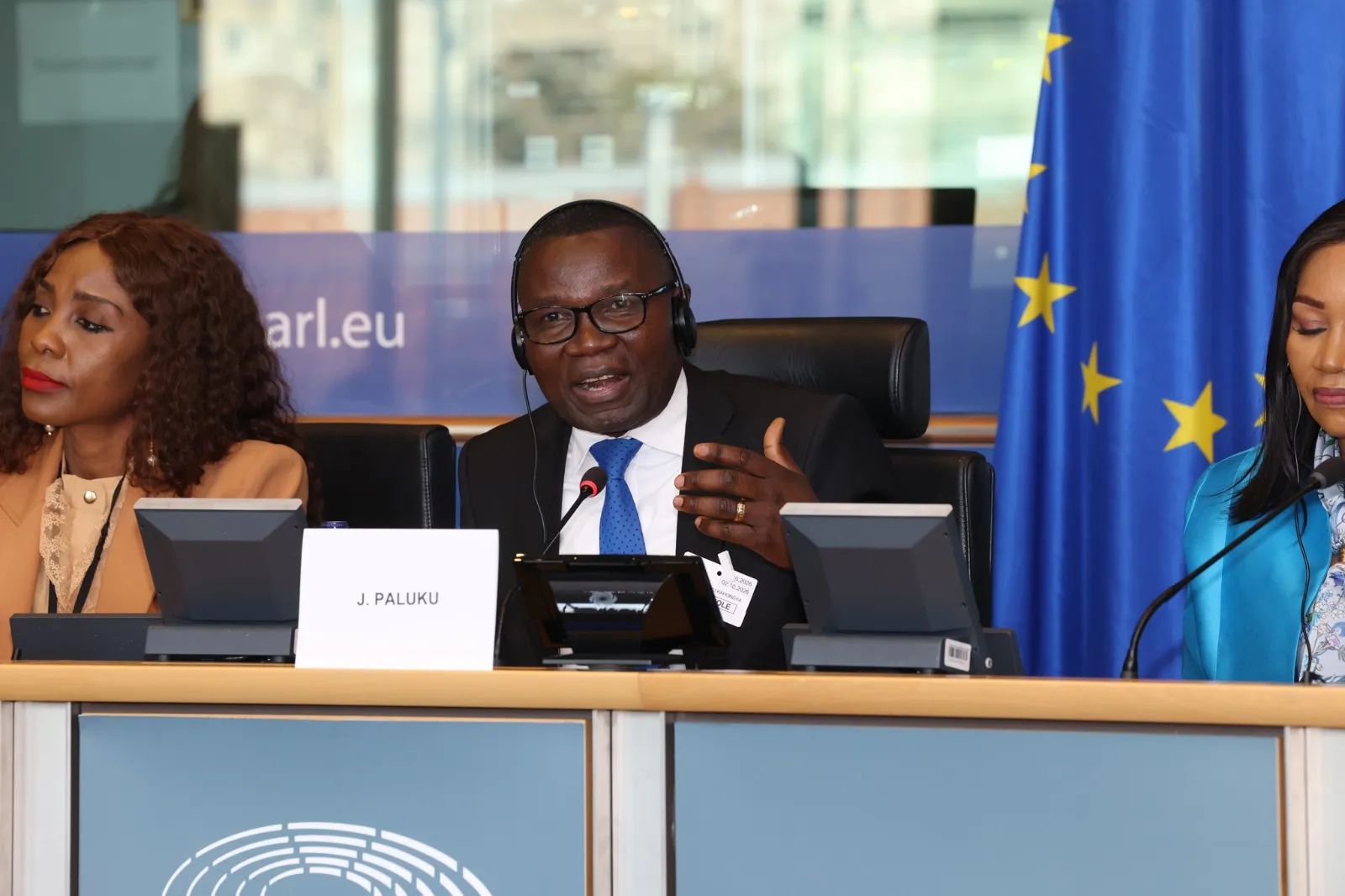
This is an African revolution—an AfCFTA innovation that I shared at the Brussels forum.
When the Central Bank signed the DRC’s accession to PAPSS on September 18, 2026, in Kenya, many people asked me about it; here is the answer.
In short, Africa is moving forward and won't wait 45 years.
Wishing everyone a wonderful Sunday.
Julien PALUKU KAHONGYA
Minister of Foreign Trade