The government is relying on 22,800 km of roads and railways to speed up the country’s integration into the wider world
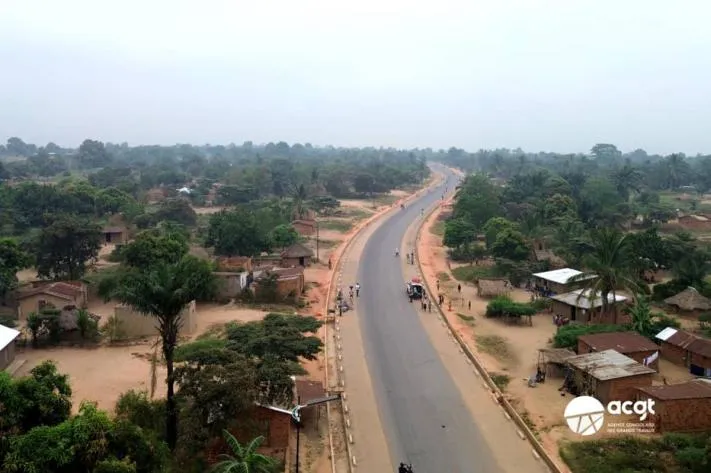
The government intends to make transport infrastructure connectivity a key driver of development. Through a programme involving 22,800 kilometres of roads and railways, the government aims to boost trade, facilitate people’s mobility and support economic growth nationwide.
This vision was presented on Monday in Kinshasa by the Minister of State for Infrastructure and Public Works (ITP), John Banza Lunda, during a press briefing.
According to the minister, the connectivity programme is based on establishing links between several of the country’s strategic corridors in order to improve national and regional economic integration.
“We are implementing a programme to improve access and connectivity across the country via a 22,800 km road network. The first phase focuses on a number of strategic routes, notably the connectivity between certain strategic corridors in the country,” he explained.
Priority infrastructure projects include, in particular, the Banana, Lobito and La Paix corridors. The latter comprises the country’s first motorway, linking Mbuji-Mayi to Bukavu over a distance of 1,080 kilometres.
For John Banza Lunda, the challenge also lies in linking these corridors to the central corridor, which provides the DRC with access to East Africa via the Tanzanian port of Dar-es-Salaam.
“We have emphasised not only the connectivity between these three key corridors, but also the link between these three corridors and the central corridor. This is because the central corridor gives us access to East Africa via the port of Dar-es-Salaam,” the minister stressed.
According to him, the interconnection of these various routes should eventually link the DRC to the trans-African corridor, thereby strengthening trade within the sub-region and beyond.
The implementation of this extensive basic infrastructure programme forms part of the partnership between the Democratic Republic of the Congo and the World Bank. The authorities hope that these investments will help to reduce the isolation of several regions of the country and provide a sustainable boost to national economic activity.