
China-Africa: the yuan is gaining ground in trade, bringing benefits for Cameroon
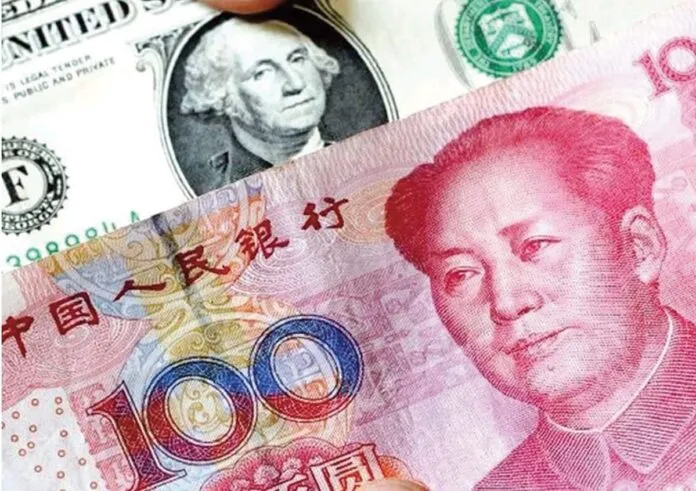
For Cameroonian importers, the aim is to reduce, in the long term, currency conversions, bank charges and payment lead times. However, these benefits will depend on how the scheme is implemented: the dollar is not disappearing from trade.
We are therefore moving towards commercial payments that do not systematically involve the dollar. On 10 October 2026, Ecobank signed a memorandum of understanding in Beijing with CIPS, the Chinese cross-border interbank payment system, with the aim of facilitating settlements in yuan between China and businesses in the 34 African markets covered by its network.
This initiative, it is explained, builds on the authorisation granted last June to Standard Bank and ICBC to settle transactions in yuan across 19 African countries.
For Cameroonian importers, the aim is to reduce, in the long term, currency conversions, bank charges and payment delays. However, these benefits will depend on the implementation arrangements: the dollar is not disappearing from trade.
For Cameroonian businesses, the adoption of the Chinese yuan (RMB) in trade transactions with China offers major strategic advantages, particularly at a time when pan-African banks such as Ecobank and the Bank of Central African States (BEAC) are accelerating the integration of the Chinese currency to bypass the US dollar.
Among the main benefits for Cameroon’s economic operators is, for example, the elimination of double conversion fees. Traditionally, a Cameroonian importer must convert their CFA francs (XAF) into dollars (USD), after which these dollars are converted into yuan (CNY) by the Chinese supplier.
Switching directly from the CFA franc to the yuan therefore eliminates a currency exchange step, drastically reducing bank charges and safeguarding SMEs’ profit margins.
SHORTER PAYMENT TERMS
There is also talk of reducing payment lead times. Dollar-based financial channels often involve US correspondent banks, which lengthens the verification process. We are told that the use of platforms such as CIPS (Cross-Border Interbank Payment System), the Chinese cross-border payment system, streamlines direct transfers and speeds up the receipt of goods.
The mitigation of exchange rate risk is also highlighted. The dollar, it is pointed out, is subject to high volatility, which can suddenly drive up the cost of imports between the time an order is placed and the time payment is made. Invoicing directly in yuan allows prices to be fixed with Chinese partners and provides protection against the unpredictable fluctuations of the US dollar.
EASIER ACCESS TO FOREIGN CURRENCY
Another advantage is that adopting the Chinese yuan in trade transactions with China can lead to greater bargaining power with Chinese suppliers. Many factories in China, it is noted, prefer to be paid in their national currency to simplify their own accounting and avoid taxes associated with foreign currencies.
Cameroonian buyers who offer direct payment in yuan may therefore secure trade discounts, more competitive rates or better credit terms from their suppliers.
There is also the benefit of easier access to foreign currency. The Central African Economic and Monetary Community (CEMAC) region sometimes faces pressures on its dollar reserves, which restricts or delays companies’ access to foreign currency for imports.
As the BEAC gradually incorporates the yuan into its foreign exchange reserves, Cameroonian businesses will have access to more liquid official channels for settling their trade flows with China, Cameroon’s leading supplier.
It is worth noting that by 2025, China had established itself as Cameroon’s leading supplier and second-largest customer, consolidating overall trade volumes in line with the recent historic records, which had already exceeded 1,600 billion CFA francs.
19 AFRICAN COUNTRIES AFFECTED
Although it went almost unnoticed last June, China’s opening of a clearing house in South Africa, it is pointed out, marked an important step in the ‘yuanisation’ of Africa. This system allows transactions between China and 19 African countries to be settled directly in yuan, without going through the dollar.
This saves time and money for businesses and governments trading with China: converting a currency into dollars, then dollars into yuan, and vice versa, represents a significant loss of revenue.
For XN Iraki, an economist and lecturer at the University of Nairobi, it was urgent to break free from this cycle through the Renminbi Clearing Bank of Africa. This clearing house is operated by the South African bank Standard Bank and the Chinese bank ICBC.
“With this clearing mechanism, losses are reduced and trade transactions become smoother,” the economist emphasises. “It was high time to set up such a system to facilitate trade between China and Africa. It makes it easier to pay for exports and imports, and the entire banking system becomes simpler as well. Clearing operations take less time and, above all, you are less exposed to exchange rate fluctuations and costs,” he explains.
A ‘YUANISATION’ THAT BENEFITS CHINA
The trend extends beyond mere trade payments. Kenya, for example, recently converted three loans—originally denominated in dollars—into yuan; these loans were taken out from the Chinese state-owned Exim Bank to finance the railway line linking Mombasa to Nairobi.
According to XN Iraki, China remains the big winner in this arrangement. “If we look at trade between China and African countries, China always runs a surplus. It exports more to Africa than it imports from Africa,” he laments. “So, in the long term, yes, it is advantageous for China. But I hope that, over time, Africa will be able to benefit more by increasing its exports to China, particularly through the reduction of customs duties.”
Furthermore, Ghana has recently set up its own mechanism to access the Chinese cross-border payment system in yuan. This banking infrastructure should enable Ghanaian importers and other eligible customers to settle certain transactions directly in Chinese currency.